|
The main features of the OBEROn platform are the following:
- maps the context domain closer to the real-world
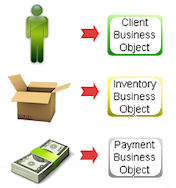 Allows
real object abstraction using the object class paradigm: lets
to define categories of similar objects (or classes) and to create
their instances with behaviors and internal states so that each
object in the real domain can have a direct representation with
a "business" object within the software application
domain. Allows
real object abstraction using the object class paradigm: lets
to define categories of similar objects (or classes) and to create
their instances with behaviors and internal states so that each
object in the real domain can have a direct representation with
a "business" object within the software application
domain.
Provides tools to create and deploy new applications that
encompass business processes:
* Business object definition (great to add new domain objects)
* Association definition between objects ( great to add
and extend existing business domain)
* Business object hierarchy definition using class hierarchy
* Property and behaviour definition for Business objects and connections (links) between them
* Vault management for collecting objects of the same domain cluster
- represents a structured repository
for documents and information (metadata) related to a general
application domain:
 Any type of job activity (developing
plans, overseeing projects, coordinating team members, managing
time, supervising people, tracking critical assignments) can contribute
to information and documentation overload. Any type of job activity (developing
plans, overseeing projects, coordinating team members, managing
time, supervising people, tracking critical assignments) can contribute
to information and documentation overload.
OBEROn is designed to manage business objects which collect any
type of information and documents from any real context.
The integration with the Apache Tika™ toolkit allows to detect, extract and create index for metadata and structured text content from various documents. In this way, you can retrieve files and documents, based on the text content in a search.
- manages the lifecycle and workflow for domain objects:
Allows a customizable lifecycles for each object
instance; that is, objects of the same type can have different
life cycles at the discretion of their creator.
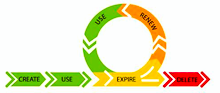 * Lifecycle / Maturity management * Lifecycle / Maturity management
* Advanced workflow management with integrated to work with custom java code in workflow
* Event Management
*
Auto numbering and revision schema
for business objects
* Transaction Management
*
Auditing / History Trace
- reduces the application development time:
 The definition of application domain
along with all its components like actor users, access privileges,
classes, properties, processes, document types, information flows,
etc. can be very quick and allows you to release the software
for production systems faster than custom development. This is
true even for future changes improvements or system integration. The definition of application domain
along with all its components like actor users, access privileges,
classes, properties, processes, document types, information flows,
etc. can be very quick and allows you to release the software
for production systems faster than custom development. This is
true even for future changes improvements or system integration.
- allows an advanced user profiles management:
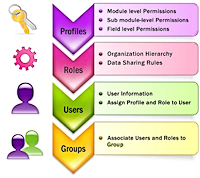 Allows users to work together easily and efficiently,
collaborate with confidence over the Internet with a multilayered
security, deliver proactive information, such as instantly informing
partners of new product requirements, resulting in smarter business
processes. Allows users to work together easily and efficiently,
collaborate with confidence over the Internet with a multilayered
security, deliver proactive information, such as instantly informing
partners of new product requirements, resulting in smarter business
processes.
* Access Management based on user,
roles (assignments), groups
* Internationalization / Localization
* Security Management
- supports web-oriented deployment, SOA integrations and mobile application development:
 Gives users without extensive technical development
skills the ability to create business applications able to publish
and share information via web interfaces and mobile applications in addition to the standard desktop clients. Gives users without extensive technical development
skills the ability to create business applications able to publish
and share information via web interfaces and mobile applications in addition to the standard desktop clients.
By integrating Web Services, the access to the object
data and documents about a Business-Services running in production
is guaranteed at any time.
* Able to define user interface form and access control
* Independent rendering capacity so can integrate any UI Technology rendering
* Supports multiple user interfaces, including JSP, JSF, SWT,
Android
- guarantees compatibility with common transactional
relational databases
 Adopts the standard SQL (employs the JDBC drivers);
this let you to exploit the power common relational / transactional
database for query performance and security. Adopts the standard SQL (employs the JDBC drivers);
this let you to exploit the power common relational / transactional
database for query performance and security.
- provides a new query language for manipulation of
infrastructure, schemas and objects
The OOQL (OBEROn-Object-Query-Language) language
allows to perform all administrative and domain object actions
and to execute command-line queries in addition to the java APIs.
* Integration with Eclipse for application development and debugging
* Import / export schema definition
* SVN Integration
* Replication
- includes a graphical engine to generate charts from
xml data
|